
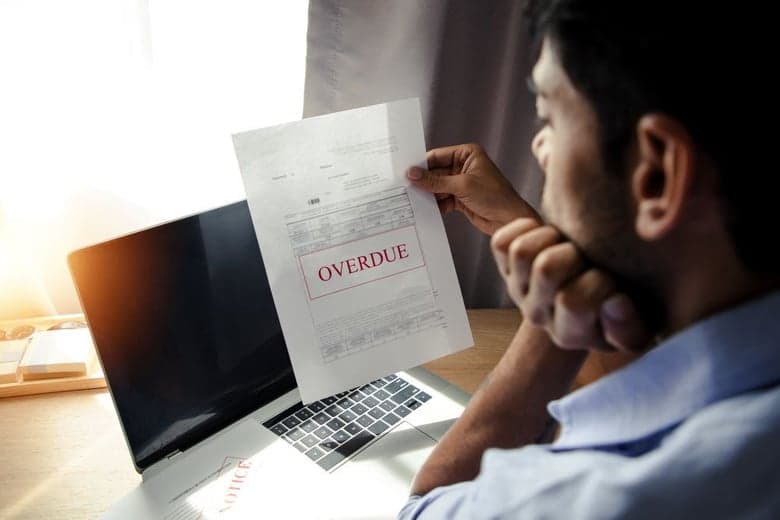
If you stop paying your credit cards, fees and a penalty interest rate kick in almost immediately, your credit score takes a hit after 30 days, and if payments stop entirely, your account can be charged off and sent to collections within six months. If you're already behind, the good news is that the timeline gives you real windows to act.
The Timeline You Need to Know
A few days late
Miss a payment and two things happen quickly: a late fee hits your account, and your issuer puts you on notice. Late fees typically run $30–$32 for a first missed payment and up to $41 for repeat violations, though this fee can never exceed your minimum payment due. Your interest rate won't jump yet, but the clock has started.
30 days of non-payment
Once you're 30 days past due, your card issuer reports the missed payment to the three major credit bureaus: Equifax, Experian, and TransUnion. That's when the real damage begins. A single late payment can drop your score anywhere from 17 to 83 points, and the higher your score going in, the steeper the drop tends to be. That mark stays on your report for seven years.
60 to 90 days of non-payment
At 60 days, the stakes go up. Your issuer can now apply a penalty APR (sometimes as high as 29.99%) to your existing balance, on top of any new purchases. That means your debt starts compounding faster. Your card company may also suspend your ability to make new purchases. Expect the volume of calls and letters from your issuer to increase significantly during this window. At this point, they're still trying to collect directly before escalating further.
120 to 180 days of non-payment
If payments have stopped entirely, your account will typically be charged off between 120 and 180 days. A charge-off means your card issuer has written the debt off as a loss for accounting purposes, but this doesn't mean your debt disappears. You still owe it. The charge-off gets reported to the credit bureaus and can do additional damage to your score, and it stays on your report for seven years from the date of your first missed payment, even if you eventually pay the debt in full. At this point, your account is usually transferred to an internal collections department or sold to a third-party debt collector, who will take over attempts to collect.
Related: How Do Debt Collectors Make Money?
How Missed Payments Impact Interest Rates
A single missed payment can trigger a penalty APR on new purchases, sometimes as high as 29.99%. If you go 60 days or more without paying, this higher rate can also be applied to your existing balance. Either way, it's significantly higher than what you were paying before, and it can make an already difficult situation move faster in the wrong direction.
The compounding effect is what makes this so hard to dig out of. A higher rate means a higher minimum payment, which makes it easier to fall behind again. If you had a promotional 0% rate, missing payments can wipe that out and replace it with the penalty rate.
One thing many people don't realize: some issuers can raise your APR on other cards you have with them too, even if those accounts are current. This is known as a "universal default" clause and it's worth checking your card agreements for.
How Missed Payments Impact Your Credit Score
Missed credit card payments can damage your credit score. Payment history accounts for approximately 35% of your FICO score calculation, making it the most essential factor.
The damage compounds with every missed payment. A 30-day late payment can drop your score anywhere from 17 to 83 points depending on where you started. By 60 days, it drops further. By 90 days, further still. And the higher your score going in, the more you stand to lose.
Different aspects of delinquency affect your score in various ways.
| Factor | How It Affects Your Score |
|---|---|
| Recency of late payment | More recent delinquencies hurt more than older ones |
| Severity of delinquency | 90 days late is worse than 30 days late |
| Frequency of late payments | Multiple delinquencies hurt more than isolated incidents |
| Number of accounts affected | The more accounts that go unpaid, the heavier the impact |
If You Can't Pay: Here Are Your Options
If you're struggling to make credit card payments, there are options available that are better than simply stopping payments.
Contact your credit card issuer
If you haven't already, call your card issuer and explain what's going on. Most have hardship programs that aren't widely advertised, such as reduced interest rates, waived late fees, lower minimum payments, or temporary deferrals. You have to ask for them by name, but they exist for exactly this situation. Card issuers would generally rather work something out than write off the debt entirely, so a straightforward conversation goes further than most people expect. Some issuers will also negotiate a settlement for less than the full balance.
The earlier you call, the more options you're likely to have. Once you're delinquent, some of those doors start to close.
Debt management plans
Credit counseling agencies can establish debt management plans (DMPs) where they negotiate with creditors on your behalf. A debt management plan can reduce or eliminate interest rates, waive late fees, and create a single, manageable monthly payment. They generally allow you to pay off debt in 3–5 years and generally have a far smaller impact on your credit score than default.
Balance transfers or debt consolidation loans
If you still have decent credit, consider a balance transfer. This allows you to transfer high-interest balances to a 0% intro APR card. Another option is to plan to get a personal loan at a lower interest rate to pay off credit cards. Some homeowners might consider using a home equity loan, though this puts their homes at risk if they default.
Minimum payments as a temporary strategy
If you cannot make full payments, make at least the minimum to keep your account current and prevent the worst credit damage. While not ideal in the long term due to interest costs, it buys you time to improve your financial situation.
understand bankruptcy options
For overwhelming debt with no realistic path to repayment, bankruptcy may be appropriate. Chapter 7 can discharge most credit card debt, but has severe credit consequences. Chapter 13 creates a 3–5 year repayment plan with potentially reduced balances. Both options stop collection activities and lawsuits. Compare Chapter 7 and Chapter 13 bankruptcy to understand how these options differ.
Prioritize essential expenses
If you must choose between bills, prioritize housing payments like rent or mortgage, utilities, food and medicine, and transportation needed for work. Credit cards and other unsecured debts should be last on your priority list if resources are severely limited.
Long-term Financial Recovery
Once you have addressed any immediate payment issues, create a realistic budget that includes all your income and expenses.
Also, work on building an emergency fund to prevent future payment problems. Most credit card balances balloon when people use them for emergency expenses, such as car or home repairs, or to pay a medical bill.
At the same time, consider looking for additional income sources to improve your finances and give yourself some breathing space. You can direct more income toward credit card payments and building an emergency fund.
Finally, monitor your credit report and dispute any inaccuracies you find. Once you have resolved credit card delinquencies, consider secured credit cards to rebuild credit.
What to Do Next
Falling behind on credit card payments is stressful, and it's more common than most people realize. You don't have to have it all figured out. You just have to be willing to look at where things stand and ask for help when you need it.
If you haven't already, call your card issuer to ask about hardship programs. When you call, explain your situation honestly: what changed, why you're struggling, and that you want to find a way to stay current.
If the debt feels bigger than one issuer can help with, talking to a nonprofit credit counselor is a good next step. They can help you look at the full picture, including what you owe, what you're bringing in, and what a realistic path forward looks like.
Whatever you decide, you don't have to figure this out alone. ClearOne Advantage has helped thousands of people work through situations like this and come out with a plan that actually fits their lives. If you want to talk through your options, we're here.
Free, No-Obligation Debt Analysis
ClearOne Advantage has helped thousands of people get out of debt in a streamlined and organized way. Call us today at 888-335-0896 or contact us to get a free savings estimate.